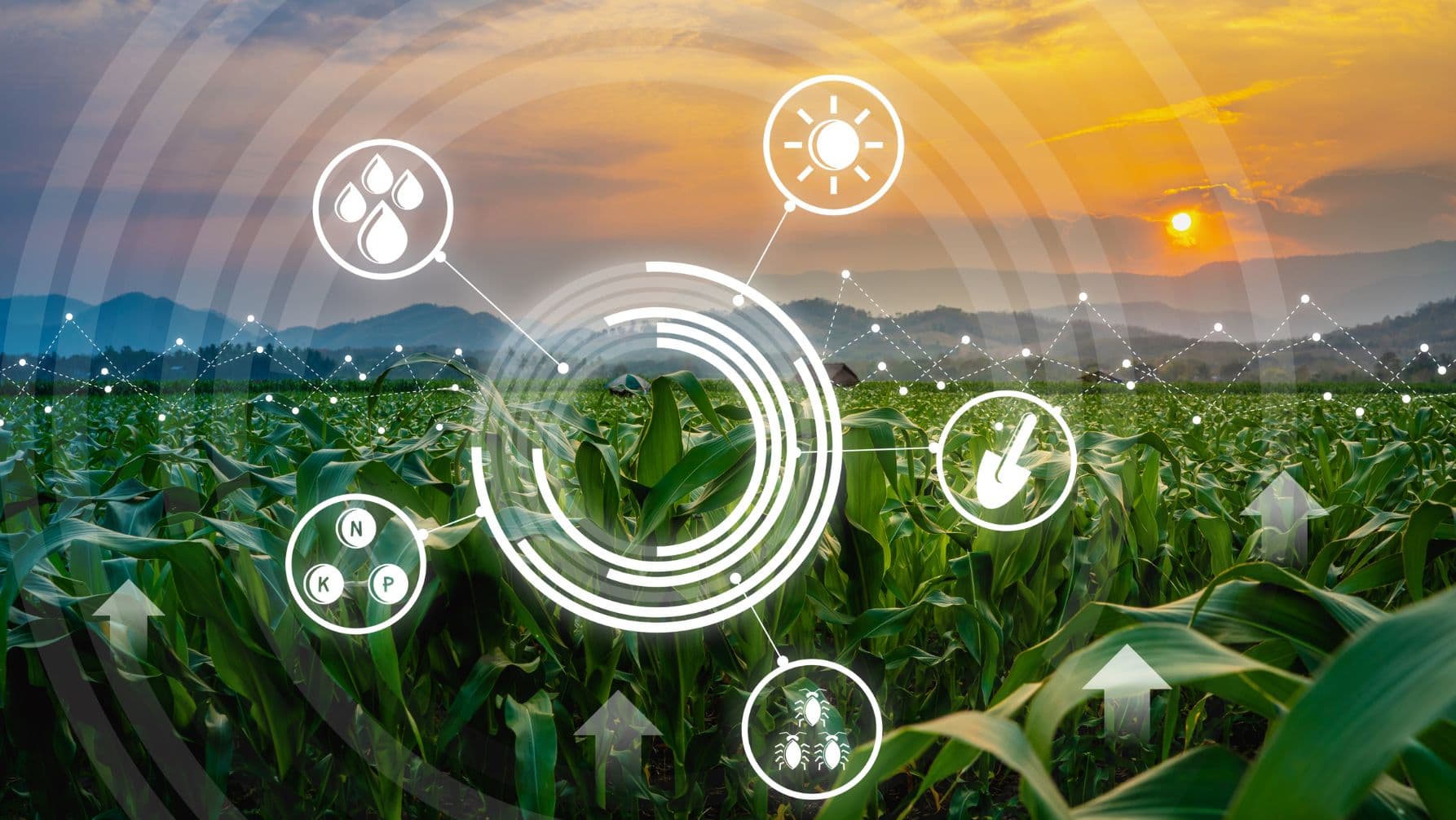

Artificial Intelligence (AI) and Machine Learning (ML) technologies are bringing significant transformations to agriculture, enabling farmers to manage production processes more efficiently, increase crop yields, and optimize operational costs. Below are five areas where AI and ML technologies are revolutionizing agricultural practices.
1. Management Systems
Challenge:
Crop, livestock, water, and soil management are time-consuming and prone to errors when handled manually.
Solution:
AI-based systems automate monitoring and management:
- Crop Management: Detect weeds, diseases, and pests in real time.
- Water Management: Smart irrigation scheduling using weather and soil data.
- Soil Management: Optimize fertilizer usage for soil fertility.
- Livestock Management: Image and video analysis detect early disease signs.
Overall Impact:
- Optimized crop production
- Efficient water and nutrient use
- Improved animal health
Key Takeaways: AI improves efficiency and productivity while ensuring timely problem resolution.
Future Prospects: More accurate predictions and broader optimization opportunities.
2. Monitoring and Production Support Systems
Challenge:
Crop sorting and intrusion detection are manual and inefficient.
Solution:
Computer vision systems detect intrusions and sort crops by shape, color, and size, ensuring only top-quality goods are processed.
Overall Impact:
- Higher quality standards
- Improved production efficiency
Key Takeaways: AI-driven vision technologies enhance both quality and productivity.
Future Prospects: Faster, more precise sorting systems.
3. Food Safety
Challenge:
Ensuring food quality and safety across production is challenging.
Solution:
AI evaluates plants by analyzing texture, shape, size, and color, ensuring only safe, high-quality products reach consumers.
Overall Impact:
- Increased consumer trust and satisfaction
Key Takeaways: AI significantly enhances quality control and food safety.
Future Prospects: More advanced models will allow even more precise quality control.
4. Greenhouse Automation
Challenge:
Maintaining optimal climate and energy efficiency in greenhouses is complex.
Solution:
AI-powered automation systems manage climate, humidity, and energy use in real time with IoT sensors.
Overall Impact:
- Improved growing conditions
- Reduced energy and cost
Key Takeaways: AI automation makes greenhouse operations more efficient.
Future Prospects: Continuous AI advancements will lead to fully optimized greenhouse ecosystems.
5. Demand and Crop Forecasting
Challenge:
Accurate crop yield forecasting remains a key difficulty for farmers.
Solution:
AI analyzes historical data, weather, and soil quality to forecast yields, improving production and supply chain efficiency.
Overall Impact:
- Better production planning
- Reduced waste and losses
Key Takeaways: Forecasting models make agricultural production more reliable and efficient.
Future Prospects: Integrated forecasting systems will optimize supply chains further.
Conclusion
AI and ML are transforming agriculture by boosting yields, improving efficiency, and enhancing sustainability. From automated management to food safety and forecasting, these technologies enable smarter farming practices.
What You Can Do
If you want to learn more about applying AI in agriculture, contact us. Our team is ready to support your digital transformation.
📩 Reach us at info@syntheticaire.com.
Because unique solutions and proven results are what your organization deserves.