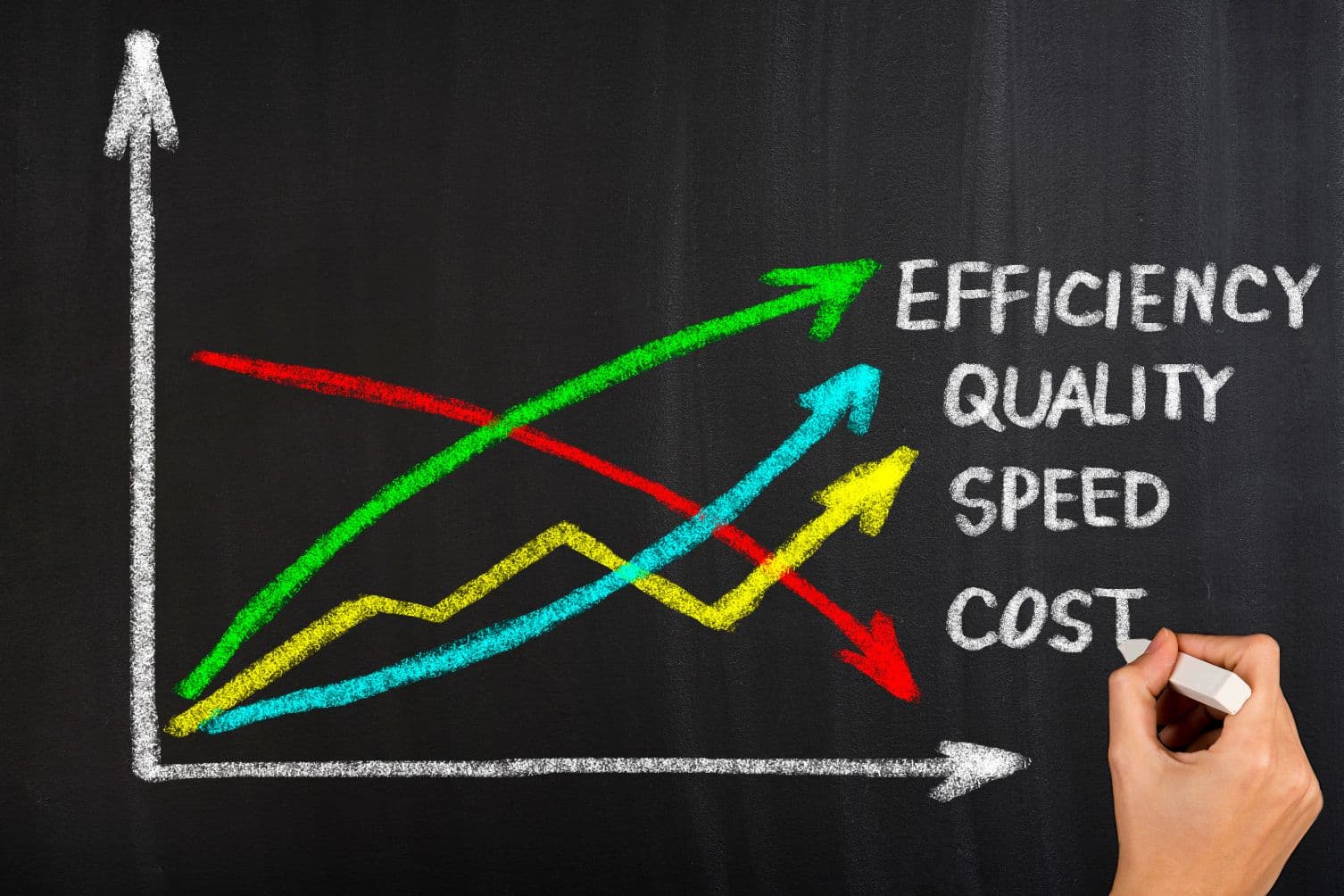

Implementing AI and ML projects comes with numerous challenges, from data management to model development and solution integration. Increasing efficiency and accuracy is essential for the success of AI-driven solutions, so it’s crucial to apply the best practices.
In this article, we’ve gathered some key best practices you should follow in AI and ML projects to achieve your goals faster and more accurately.
1. The Importance of Data Collection and Preparation
Challenge: Poor-quality or insufficient data undermines model accuracy, regardless of the algorithm used.
Best practices for data management:
- Data cleaning: Ensure data is accurate, structured, and consistently formatted.
- Data augmentation: Use techniques such as synthetic data generation to expand small datasets.
- Diversified sources: Integrate multiple data sources to improve model performance.
2. Model Selection: Don’t Overcomplicate Things!
Challenge: Many assume complex models always perform better, but simpler ones often work best—especially with smaller datasets.
Best practices for model selection:
- Simplicity first: Start with simple models and scale complexity only when necessary.
- Experiment: Test multiple algorithms and validation techniques.
- Avoid overfitting: Don’t make models excessively complex; they may fail on new data.
3. Continuous Testing and Evaluation
Challenge: Models must be monitored continuously, especially after deployment, to ensure performance remains strong.
Best practices for testing:
- Cross-validation: Reduces bias from random data variations.
- A/B testing: Ensures new models genuinely outperform existing ones.
- KPI monitoring: Track metrics like accuracy, precision, and recall.
4. Automated Processes: Implementing MLOps
Challenge: Without automation, AI projects face slow cycles and higher maintenance costs.
Best practices for MLOps:
- Automated deployment: Streamline model updates with automated pipelines.
- Version control: Track datasets and model versions.
- Continuous integration/testing: Keep models optimized with real-time data.
5. Scalability of Data and Models
Challenge: Without proper planning, scaling AI projects becomes costly and difficult.
Best practices for scalability:
- Cloud infrastructure: Use scalable platforms like AWS or Google Cloud.
- Containers & microservices: Deploy AI apps in flexible, containerized environments.
- Automatic scaling: Adjust resources dynamically based on demand.
Conclusion
Success in AI and ML projects requires planning, quality data, simplicity, continuous evaluation, automation, and scalability. Applying these best practices improves accuracy, saves resources, and ensures long-term adaptability.
What You Can Do
Want your next AI project to succeed? Follow these proven best practices and partner with us to maximize efficiency and accuracy.
📩 Contact us at info@syntheticaire.com.
Because your organization deserves customized solutions and proven results.