
When enterprise leadership decides to modernize operations, the decision is almost always accompanied by a distinct sense of internal anxiety. In the minds of executive leaders, digitalization is synonymous with unpredictable outcomes, months of internal chaos, and astronomical costs. The question that paralyzes action is always the same: where do we start so that we do not jeopardize daily operations, yet still achieve immediate, visible results?
The answer does not lie in a complete overhaul of complex ERP systems, nor in the immediate, blanket deployment of artificial intelligence across every corner of the business.
The smartest business strategy is to strike the area that carries the lowest integration risk but generates the loudest daily administrative noise. This area is none other than incoming emails, unstructured client requests, and support tickets—the ticket processing phase. This is the exact point in your operations where you can secure a highly visible, quantifiable business victory with minimal upfront investment and the shortest possible timeline, all without disrupting your core enterprise architecture.
The Lowest Risk: Preserving the Integrity of Existing Systems
Why is the automation of email and ticket processing the safest entry point? Because this process sits at the absolute edge of your existing corporate infrastructure, right at the data-entry channels.
If a project attempts to restructure the core of an internal inventory or billing system, any error triggers an immediate domino effect that can paralyze deliveries or finance. In contrast, structuring and pre-processing incoming messages operates as a completely separate, isolated layer.
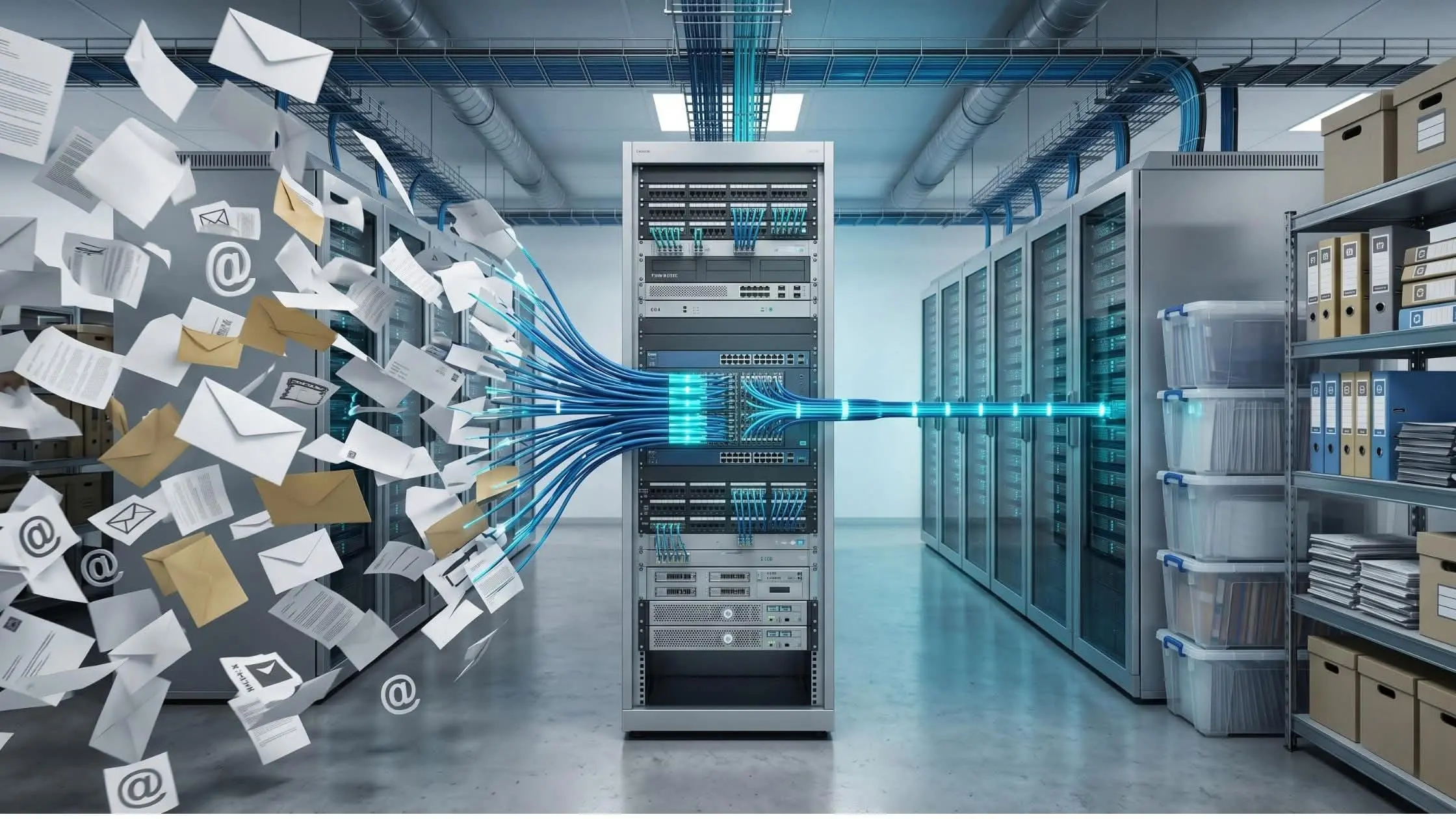
Your underlying systems—whether an in-house CRM, an Excel-based database, or a legacy ERP—remain entirely untouched. The automation simply takes incoming chaotic information, refines it into clean, structured, and pre-categorized data, and routes it to the appropriate destination. When technology operates at this external boundary, your core business remains entirely secure. There is no downtime, no business interruption, only a massive upgrade in the quality of incoming data from day one.
The Fastest ROI: Instantly Silencing Administrative Noise
In customer support, logistics centers, and back-office departments, a significant portion of working hours is not spent solving actual problems. Instead, it is consumed by manual administrative overhead: opening an email, deciphering a chaotic description, trying to figure out what the client actually wants, and manually copy-pasting that data into the correct internal database.
This is pure administrative noise. And this is exactly where automation can stabilize operations within a matter of hours.
When a system can autonomously interpret the content of an incoming email, recognize the client account number, identify the exact issue type (such as a billing dispute or a delivery delay), and immediately route the email along with its attachments to the desk of the right specialist, processing times shrink to minutes. No more hunting for information, no more manual sorting.
On Monday morning, frontline employees do not open a chaotic inbox of a thousand unread emails; instead, they find a clean, prioritized queue of actionable tasks. The jump in efficiency is visible in your performance reports not next quarter, but the morning after deployment.
Intelligent Context Building: How It Works in Practice
To understand how this technology operates autonomously and structurally without human intervention, we can look at Sortly, Syntheticaire’s proprietary email automation system, as a benchmark. Modern workflow management has evolved far beyond merely sorting emails into folders based on basic keyword matching.
When Sortly connects to a company's shared mailboxes (such as info@, support@, or dispatch@), the AI does not just scan the incoming text. It contextually understands the email and its attachments—whether they are bills of lading, PDF confirmations, or legal documents.
The true business value, however, is unlocked through integration. The moment a message arrives, the system syncs with the company’s existing CRM or ERP (such as HubSpot, Salesforce, or Zoho). It pulls the client’s order history and open cases, enriches the ticket with this critical data, and automatically generates a detailed ticket in the background system, assigning it directly to the responsible team member. Simultaneously, the AI drafts a highly personalized response. If needed, an optional document-sorting module automatically saves attached files into the client's internal folder, organized by date. Consequently, employees no longer start from scratch, wasting time searching for data and drafting replies; their role is elevated to simply reviewing the system's pre-packaged, data-supported workflow and approving it with a single click.
The Trojan Horse: How This Step Clears the Path to Total Efficiency
The greatest strategic benefit of phased automation is that this initial, rapid victory quietly prepares the ground for more advanced engineering developments. Sorting out email and ticket processing is, in reality, your digital Trojan horse.
As long as incoming data remains unstructured—trapped in free-text emails, scanned PDFs, or poorly filled web forms—it is practically impossible to automate downstream internal processes like logistics, invoicing, or manufacturing. Software engines require clean, structured data to operate.
By using systems like Sortly to transform incoming chaos into a structured database in Phase 1, the enterprise suddenly crosses the threshold into the next stage of technological maturity.
Once incoming tickets are structured and clean, leadership will naturally spot the next logical step: "If the system already knows this email is a delivery modification request, why should our team manually type it into the ERP?" The first successful, low-risk module naturally pulls the next automation steps forward because the hardest work—cleaning and structuring the data—was already solved at the gateway.
Breaking Down Psychological Barriers
There is another critical variable that purely technical firms tend to overlook: organizational trust. If an enterprise launches its digital journey with a massive, disruptive software overhaul, employees become anxious, resist the change, and quietly boycott the new system.
If you start with ticket processing automation instead, your team does not see a threatening control tool. They experience a system that immediately strips away the most mind-numbing, frustrating part of their day: hours of manual copy-pasting and sorting emails.
The technology instantly becomes an ally in their eyes. When employees feel first-hand that automation does not replace their value, but rather makes their workday highly manageable, internal resistance evaporates. By the time leadership is ready to tackle more complex, strategic process optimizations, the organization is no longer afraid of digitalization—they actively demand it.
Scaling up does not require taking a blind leap into the unknown. The most reliable path to success is to secure the outermost, loudest gateway of your enterprise.
Fast, secure, with immediate return on investment.
The question remains: will you continue to delay, citing the risks of overhauling your entire corporate structure, or will you silence the daily administrative noise right where it is easiest and safest to do so?